– Executive Function Specialist + ADHD Expert –
Knowing what to do
isn’t the same as being able to do it
I specialize in helping adults who are struggling with changes or challenges in executive functioning understand what’s affecting how they function, so they can make actionable changes, build the skills they need, and know how to adjust as their needs and capacity change.
You’re Tired of Ghosting Yourself
The Sunday scaries set in early, and you find yourself scrolling. Reels leave you deciding that this is the week you meal prep. You scroll through recipes, make a grocery list, go to the store, and buy everything you need.
You get home, put the groceries away, and sit down on the couch for a minute.
Somehow, you never get back up to meal prep.
So you order takeout.
Monday morning, the alarm goes off. You stayed up too late, so you overslept. Now you’re frantically running around the house looking for the sunglasses you know you took off your head somewhere yesterday.
Why am I the person with eight pairs of sunglasses who can’t find any of them?
You get to work ten minutes late. But you’re put together. You’re friendly and positive. You work hard, usually above and beyond, so people tend to overlook those ten minutes.
Your boss gives you a task: call five people and confirm their attendance.
You turn it into an Excel sheet.
Another task comes in. You make that one elaborate than it needs to be, too.
By the end of the day, you have 15 tabs open and a pile of unfinished work. So you skip your evening plans and stay late. You feel guilty that it’s another day of unfinished tasks you should have been able to get done.
You realize you never got up from your computer today. You never ate lunch. At some point you thought about taking a break, but you were finally getting things done and what if you couldn’t get going again? The gym gets skipped, and your step count is low. The texts from your friends are still sitting unanswered.
Takeout again.
And then comes the guilt.
You were going to go to the gym, start the meal prep, text your friend back. But somehow, the evening got away from you.
You go to bed exhausted, thinking about everything you didn’t do. The day replays like a loop, keeping you awake, and Tuesday starts looking a lot like Monday.
By Friday, you still haven’t answered the text. Now responding has become its own thing.
Can I still respond? What do I say? Do I need to explain why it took me this long?
You look around the house. The groceries you bought for meal prep are still sitting untouched. The closet is disorganized. The chair in your bedroom has become a pile of clothes. Everywhere you look, there’s something you keep meaning to take care of.
Something has to change.
Why do I come home and immediately sit on the couch?
Why do I keep setting goals and then ghosting them?
Why can’t I just follow through on the things I say I will do?
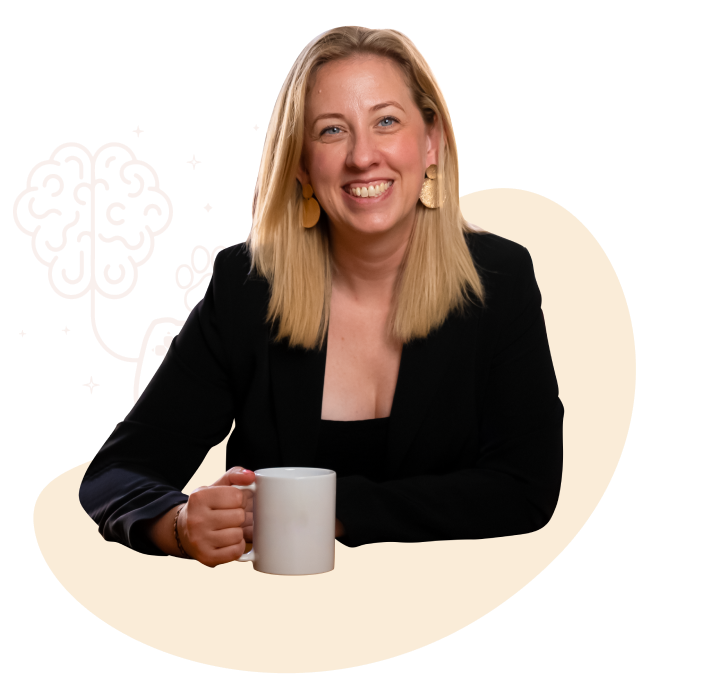
Victoria Prisco, M.A., M.S., Neurodivergent Systems Specialist | Creative Arts Therapist | Licensed Professional Counselor | Licensed Special Educator | PMP | Certified Menopause Coach
It’s not about finding the perfect timer, reminder, or planner.
It’s about learning what’s happening underneath the ADHD feeling, making changes based on what you learn, and knowing how to adjust when your needs or capacity changes.
Not every unfinished task, lost hour, missed plan, or overwhelmed moment is happening for the same reason. Working with a neurodivergent systems specialist, we look at the whole picture, collecting information about what’s happening and separating it out instead of treating everything as “my ADHD.”
You’ll get homework that helps us rework daily habits and responses. We’ll break down what isn’t working and use what we learn to build new systems. You’ll walk away understanding why those systems work for you and knowing how to adjust when things change.
Choose Your Adventure
Pregnancy • postpartum • perimenopause • menopause
Women’s Collective
Specialized support for women who have or suspect ADHD and are navigating hormonal changes.
Together, we’ll differentiate what you’re experiencing → make informed decisions about your support → use homework to build new habits and processes → build day-to-day systems around what you now know.
ADHD · ANXIETY · AuDHD · AUTISM · NO DIAGNOSIS NEEDED
Individual Sessions
Every-other-week, 30-minute sessions focused on improving executive functioning and follow-through.
Instead of assuming everything is one thing (like ADHD), we’ll focus on figuring out what’s happening in the moments that feel like executive functioning disasters. Then we’ll use what we learn to reshape habits, daily structure, routines, and patterns around what’s actually going on.
This isn’t about finding the perfect timer or reminder. It’s about learning what’s happening, understanding what needs to change, and building systems you know how to adjust when life changes.
ELEMENTARY-AGED NEURODIVERGENT KIDS
Minecraft Social Development Program
Kids meet live on Google Meet while playing together in a private Minecraft Bedrock Realm.
Minecraft becomes the playground, giving kids a place to practice & learn social skills while social situations are happening. Groups focus on social skills that grow into life skills—like public speaking and flexibility—while helping kids learn what it means to be a good friend and build friendships.
Our motto: Treat everyone with kindness.
Please note, This program focuses on building and practicing social skills it is not a behavior-change program organized around stopping or treating a particular behavior.
MEET Your Systems Specialist
Hey! I’m Victoria
As a former special education teacher and sit-on-the-couch-and-spill-your-guts therapist, I used to have a lot of conversations with people after the fact.
Tell me what happened. What could you have done differently?
Sometimes people genuinely didn’t understand what went wrong. Other times, they were way too hard on themselves. But talking about it didn’t necessarily make everyday life any easier. The executive functioning loops they walked through my door wanting help with were still there.
I realized I needed to change the scope of what I was doing. Instead of letting insurance guidelines define the work, I wanted to use what I knew to help people with the things they actually came in wanting to change.
So I brought together 19 years of working with neurodivergent people as a special education teacher and therapist and put on my project management hat. I changed the way I worked so people left sessions understanding more about what was happening, with a collaborative plan and something concrete to work on between sessions.
I tell clients this all the time: sometimes you set out with a goal and need to stop and ask, What is in my capacity? How do I need to adjust the scope? What is possible for this iteration?
The goal can stay the same. How you get there sometimes needs to adjust.
And, apparently, I’ve been doing some scope adjusting in my own life too.
A few years ago, I decided to stop waiting for Prince Charming and become a mom on my own. Now I’m single mom’in it on a wing and a prayer.
Before IVF, I was the woman who enjoyed a long run, crafted her way through the year, and was killin’ it in Guns and Buns.
In this iteration of me, I’m the messy-bun woman battling daycare germs, living on coffee, starting a new craft by the day (I haven’t finished one yet this year), and trying to set running goals for myself.
So pull up a seat, bring a snack, and enjoy your coffee. Don’t worry about being too put together yourself. I’m right there with you.

Want to see what 30 minutes can do?
Not Sure about working together?
Check out prior client experiences


Give a homework sheet a try
Not ready to jump into a session yet?
See what it’s like to track what happens during your workday, step back and look at the whole picture, and use what you notice to understand why your plan went off course.
We’ll use the information you gathered to look at what may be contributing to that unfinished to-do list—from burnout and workplace expectations to anxiety, ADHD, or a combination of things.
In sessions, we’d take it further. We might use what you noticed to explore energy and capacity, time management, boundaries, and what needs to change in the systems around your day.
Messy Bun Field Notes
No posts